
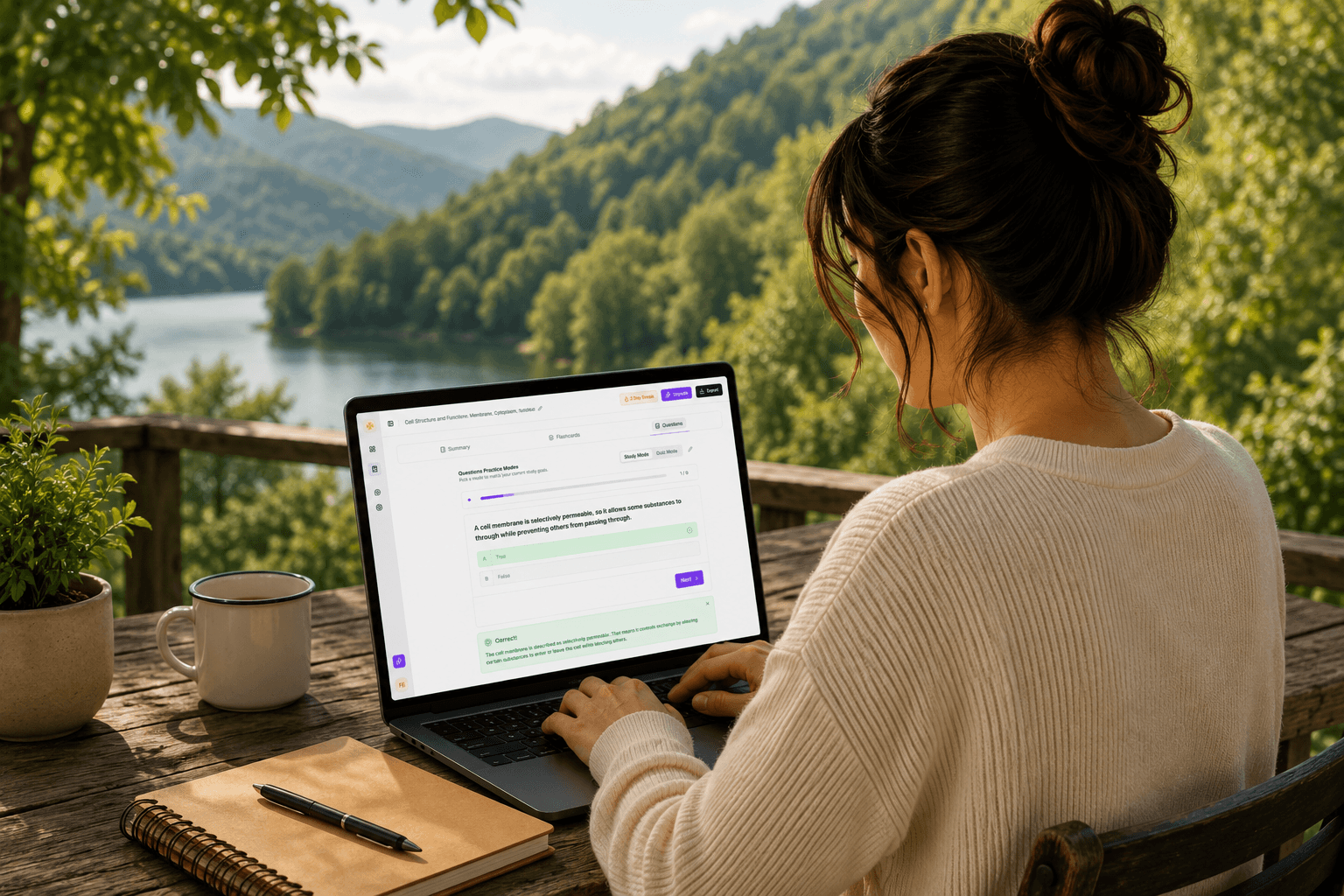
Studley has become one of the popular AI-powered study platforms among students in recent years. It offers a variety of features, including generating notes from PDFs, creating summaries, building flashcards, and providing an AI-assisted learning experience. The platform is primarily positioned as an all-in-one study assistant for individual learners.
However, for many students, effective learning involves more than simply summarizing notes or chatting with AI. Educational research has consistently shown that two of the strongest predictors of long-term retention and exam success are Active Recall and Spaced Repetition. As a result, many learners are looking for platforms that not only help them consume information but also regularly test their knowledge and encourage them to retrieve information from memory.
While Studley is a capable learning assistant, some users compare alternatives when they specifically need quiz workflows, teacher tools, classroom management features, student performance analytics, quiz-sharing capabilities, and assessment options. For both educators and exam-focused students, platforms that can directly transform learning materials into quizzes, flashcards, and assessment activities can provide a useful study workflow.
In this guide, we’ll explore the best Studley alternatives available in 2026 and compare their workflow fit. Whether you’re a student looking for a more active way to prepare for exams or a teacher searching for interactive assessment tools for your classroom, you’ll find a Studley alternative that fits your needs.
Quick answer: For students and teachers who want quizzes, classroom-ready sharing, active recall, flashcards, printable practice materials, and progress tracking, QuizRise is the Studley AI alternative to compare first.
Quick Comparison of Studley Alternatives
| Alternative | Best For | Key Strength | Consider If You Need |
|---|---|---|---|
| QuizRise | Students and educators | Quizzes, flashcards, summaries, sharing, printable quizzes, and analytics | Active learning and classroom-ready quiz workflows |
| StudyFetch | Guided AI study support | AI tutor, notes, flashcards, and quizzes | Personalized study workflows |
| Knowt | Flashcard-first learners | Flashcards, tests, and spaced repetition | Retention-focused exam review |
| NotebookLM | Research-heavy learners | Source-grounded answers and notes | Help understanding uploaded sources |
| Revisely | Exam-focused students | Revision notes, quizzes, and flashcards | Straightforward exam prep |
| RemNote | Knowledge-management learners | Notes, flashcards, and spaced repetition | Connected long-term study |
| Mindgrasp | Large-content review | Summaries, notes, flashcards, and explanations | Fast comprehension |
How We Selected These Studley Alternatives
We selected these tools by reviewing public product information and the workflows students and educators usually compare: supported input types, quiz and flashcard generation, Active Recall support, Spaced Repetition, note-taking, teacher assessment features, sharing, analytics, ease of use, and free-plan or pricing signals.
We also prioritized tools that map to clear study jobs: exam preparation, classroom assessment, source-based research, flashcard review, content summarization, and long-term retention. Pricing and free-plan notes are included as a starting point, but limits can change, so students and schools should verify each provider’s current plan before subscribing.
This comparison is based on public product information and workflow fit. A feature not being highlighted in this guide should be read as editorial emphasis, not as a claim about absent capabilities in Studley or any other tool. Studley is a trademark of its respective owner. QuizRise is independent and is not affiliated with, endorsed by, or sponsored by Studley.
What Is Studley?
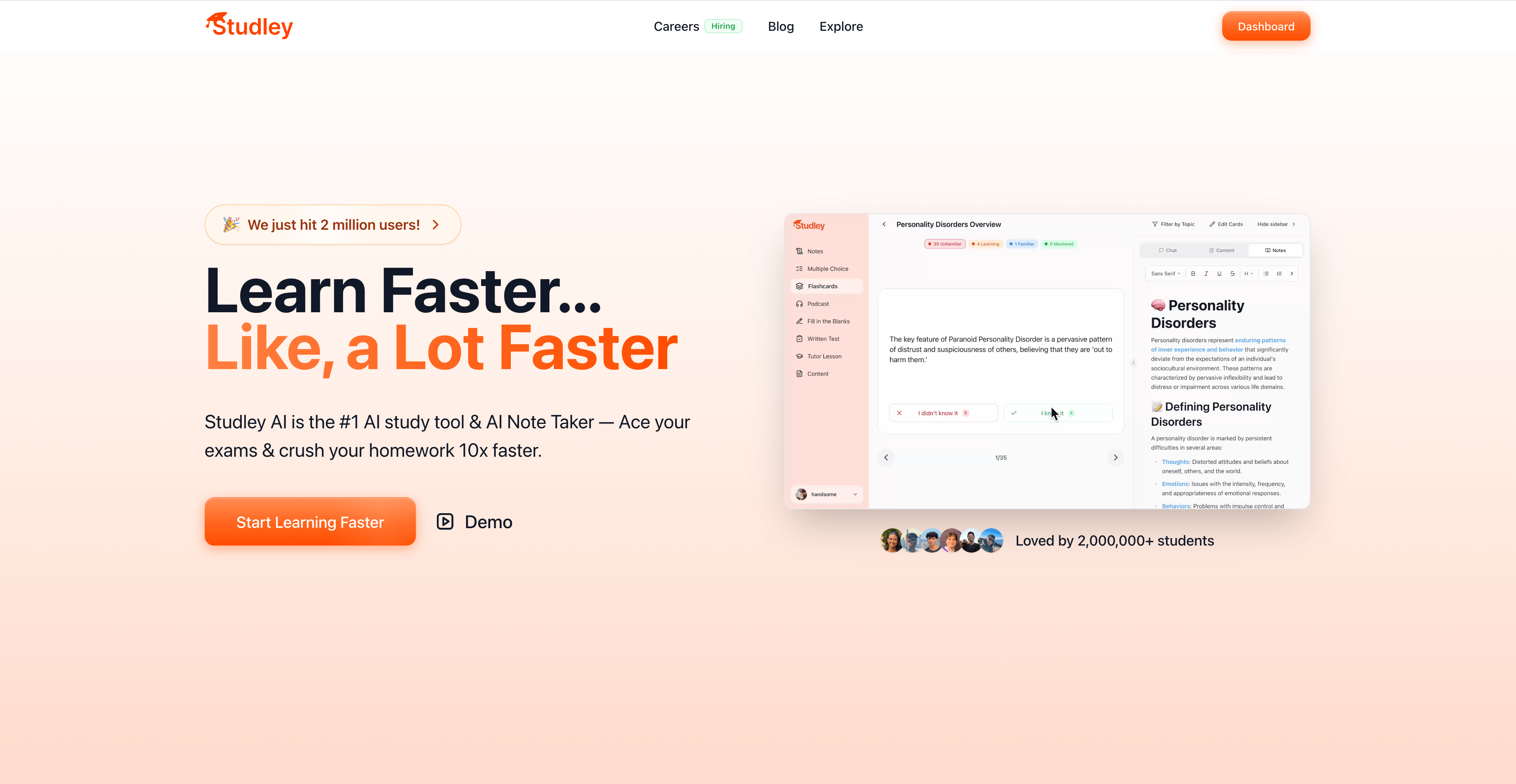
Studley is an AI-powered learning platform designed to help students study more efficiently. Users can upload PDFs, class notes, presentations, and other educational materials, then use AI to generate summaries, flashcards, practice questions, and various study resources.
The platform’s primary goal is to reduce the time students spend organizing information and preparing study materials. Instead of creating notes from scratch, students can quickly analyze their content with AI, identify key concepts, and generate resources they can use during exam preparation.
Studley also offers AI Tutor features that allow students to ask questions, receive explanations, and gain a deeper understanding of difficult concepts. As a result, Studley positions itself as a comprehensive study assistant that combines content generation, note-taking, and AI-powered learning within a single platform.
That said, some students and educators compare alternative platforms when their workflow depends on Active Recall, Spaced Repetition, quiz-based learning, classroom assessments, and student performance analytics.
Why Do People Look for Studley Alternatives?
Although Studley is a popular AI-powered study tool, every learner has different study habits, goals, and preferences. As a result, many users explore Studley alternatives to find features that better align with their learning needs.
Here are some of the most common reasons students and teachers look for alternatives to Studley:
1. They Want More Active Recall and Spaced Repetition Support
Studley does a good job of generating summaries, notes, and study materials. However, many students believe that the most important part of learning is not rereading information but actively retrieving it from memory.
Research on retrieval practice and distributed practice shows why Active Recall and Spaced Repetition can improve long-term retention. Classic studies on the testing effect, spaced review, and effective learning techniques support workflows that make learners retrieve information repeatedly over time. For this reason, some learners prefer platforms that offer advanced quiz systems, intelligent flashcard algorithms, and structured review schedules.
2. They Need Quiz and Exam Preparation Workflows
Many users prefer preparing for exams by answering questions rather than simply reading summaries.
While Studley can generate study materials, some learners compare alternatives based on assessment features such as:
- Automatic quiz generation
- Multiple-choice questions
- True/false questions
- Fill-in-the-blank exercises
- Practice exams
- Performance reports
These tools can make exam preparation more interactive and effective.
3. They Need Teacher and Classroom Management Workflows
Teachers often compare study tools differently from individual learners because classroom workflows can require additional functionality.
Educators frequently look for features such as:
- Assigning quizzes to students
- Creating classrooms or groups
- Tracking student results
- Student performance analytics
- Live assessments
- Shareable quiz links
As a result, platforms with educator-focused workflows may be a practical fit for classroom use.
4. They Want More Content Conversion Options
Some users want to work with more than just PDF files.
Students increasingly look for platforms that can convert:
- YouTube videos
- Web pages
- Class notes
- Presentation files
- Google Docs content
into quizzes, flashcards, summaries, and other study materials.
5. They Want Pricing and Free Plan Options That Fit Their Needs
Budget is an important consideration, especially for students.
Many users seek alternatives that offer:
- More generous free plans
- Lower subscription costs
- Teacher discounts
- School licensing options
These factors can play a significant role when choosing a study platform.
6. They Want Learning Analytics and Progress Tracking
Studying effectively is not only about consuming information it is also about measuring progress.
Many students and teachers want answers to questions such as:
- Which topics am I struggling with?
- Which questions do I get wrong most often?
- Which subjects should I review again?
- How well are my students performing?
For this reason, platforms with advanced analytics and reporting features continue to attract growing interest.
Ultimately, Studley can be a useful AI-powered learning platform, but students and educators often compare alternatives based on their specific study workflows. Some students prioritize exam preparation tools, while educators may require classroom management and assessment features. This is why Studley alternatives continue to gain interest, offering a wide range of solutions tailored to different learning styles and educational goals.
The 7 Best Studley Alternatives in 2026
1. QuizRise
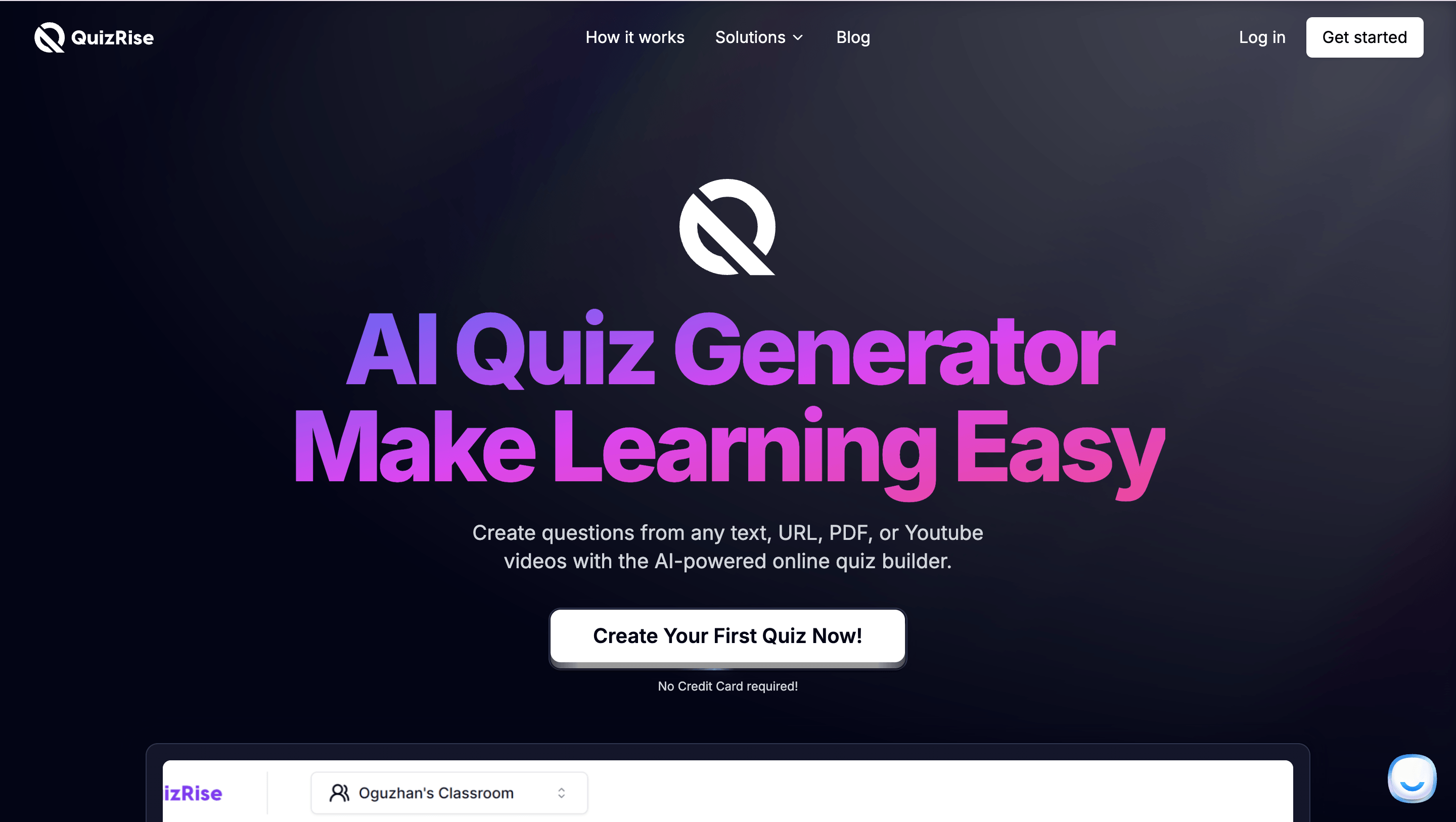
QuizRise is one of the most versatile Studley alternatives available in 2026 for students, teachers, tutors, and lifelong learners. The platform is designed to help users transform learning materials into interactive study resources that support both understanding and long-term retention.
Users can upload PowerPoint presentations, Word documents, web pages, text content, and class notes, or use QuizRise as a PDF to quiz maker and YouTube to quiz maker. QuizRise automatically converts these materials into quizzes, AI flashcards, and summaries, making it easier to review information, reinforce knowledge, and prepare for exams.
One of the platform’s biggest strengths is its emphasis on Active Recall. Instead of passively rereading notes, students can actively test their understanding through AI-generated questions. This encourages deeper engagement with the material and helps learners identify areas that need additional review.
QuizRise also includes features designed for educators. Teachers can create assessments, share quizzes with students, create printable quizzes, track performance, and analyze results. These tools make the platform suitable for both individual learners and classroom environments.
Key Features
AI Quiz Generator
QuizRise can automatically generate quizzes from PDFs, notes, presentations, web pages, and videos. This allows students to quickly turn learning materials into an AI quiz generator workflow for interactive practice questions.
AI Flashcard Generator
The platform creates flashcards that help students review key concepts and definitions. Flashcards can be used to support Active Recall and regular revision sessions.
AI Summary Generator
QuizRise extracts important information from learning materials and generates concise summaries, helping students focus on the most relevant concepts. Students working with long documents can also compare the AI PDF summarizer workflow.
PDF to Quiz
Students can upload PDF files and instantly convert them into quizzes. This is particularly useful for reviewing lecture notes, textbooks, and study guides.
YouTube Video to Quiz
QuizRise can analyze educational YouTube videos and generate quizzes based on the content, helping learners reinforce what they watch.
Web Page to Quiz
Users can transform articles, blog posts, and online learning resources into quizzes, making web-based learning more interactive.
Multiple Question Types
The platform supports multiple-choice questions, true/false questions, and fill-in-the-blank activities, providing a variety of ways to test understanding.
Student Performance Tracking
Teachers and learners can monitor progress, identify strengths and weaknesses, and use performance insights to guide future study sessions.
Best For
Students preparing for exams, teachers creating classroom assessments, tutors supporting learners, and anyone looking for a study platform built around Active Recall, self-testing, and interactive learning.
2. StudyFetch
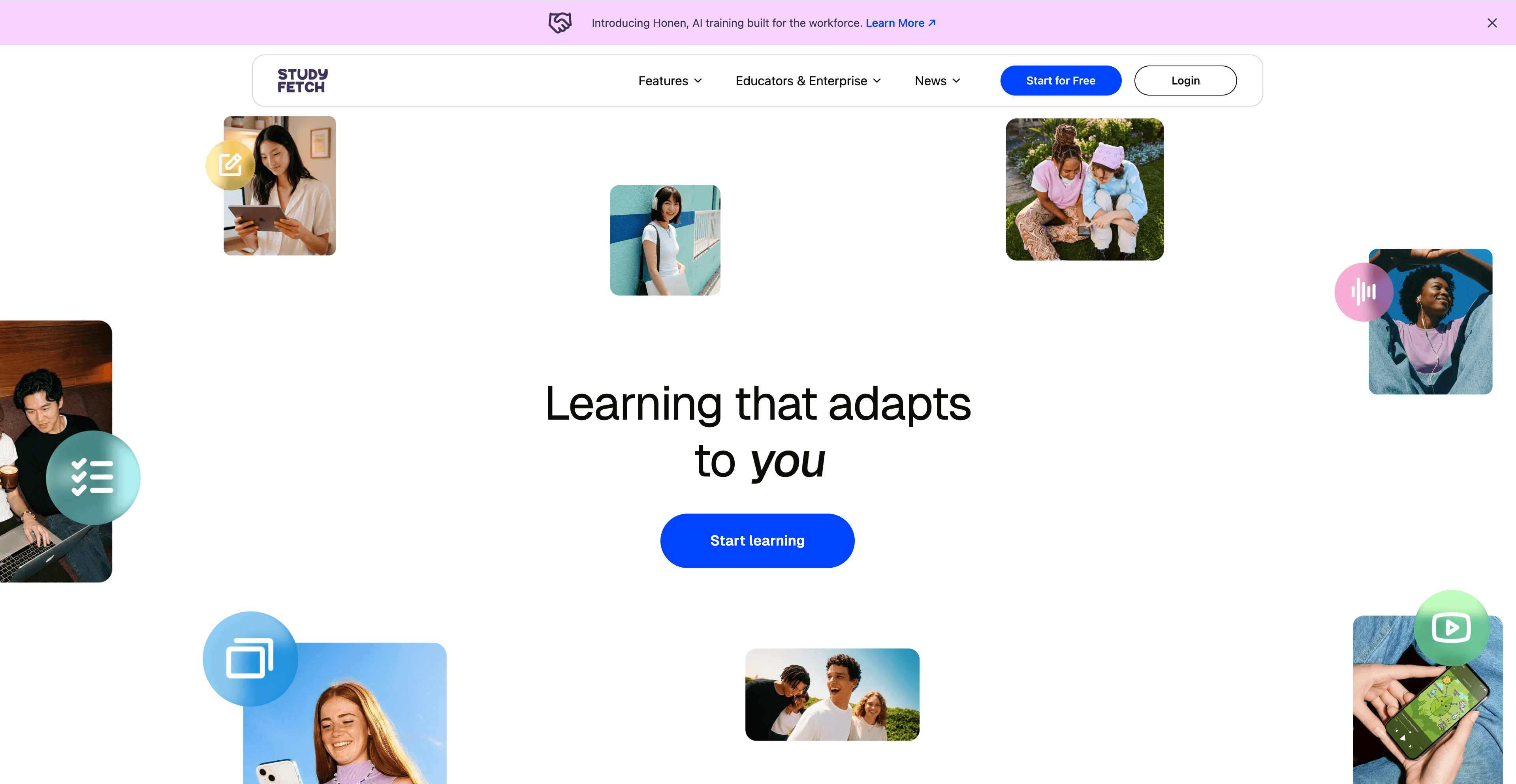
StudyFetch is a comprehensive AI learning platform that helps students convert study materials into personalized learning experiences. Users can upload lecture slides, PDFs, videos, notes, and other educational content, which the platform transforms into flashcards, quizzes, notes, and study guides. StudyFetch also includes Spark.E, an AI tutor designed to answer questions and provide explanations based on uploaded materials.
The platform aims to support a wide range of learning styles by combining content generation, AI tutoring, study plans, and interactive learning tools. Students can use StudyFetch to organize coursework, review concepts, and prepare for exams using different study formats.
Another advantage is the variety of learning resources generated from a single source. Instead of manually creating notes or flashcards, users can quickly build study materials from existing content and spend more time reviewing key concepts.
Key Features:
• AI Tutor (Spark.E)
• AI Flashcards
• AI Quizzes
• AI Notes
• Video and Lecture Summaries
• Personalized Study Plans
• Interactive Learning Activities
Best For: Students looking for an all-in-one AI study assistant with tutoring and content-generation capabilities.
3. Knowt
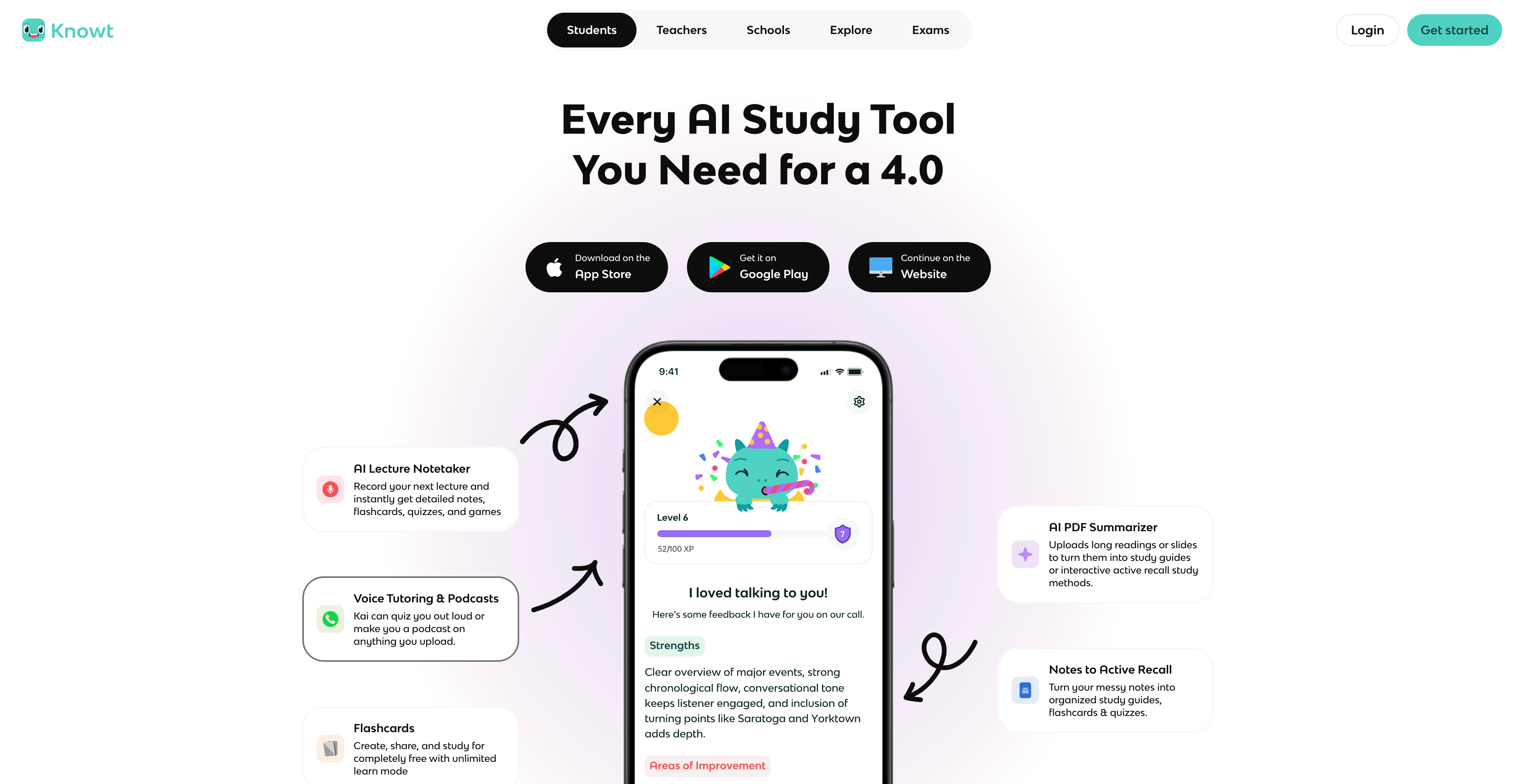
Knowt has become one of the fastest-growing study platforms for students who enjoy flashcard-based learning and exam preparation. The platform allows users to generate flashcards, study guides, notes, and practice tests from PDFs, videos, lecture recordings, presentations, and other educational materials.
One of Knowt’s most popular features is its collection of study modes. Students can practice using flashcards, multiple-choice questions, true-or-false questions, practice tests, and spaced repetition review sessions. The platform also provides a large library of shared study resources created by students and educators.
Knowt is widely used by students preparing for high school and university exams because it combines AI-powered content generation with structured review methods. The platform’s flexibility allows learners to choose study methods that match their personal preferences and academic goals.
For a focused look at flashcard-first and quiz-based tools, see the dedicated Knowt alternatives guide.
Key Features:
• AI Flashcard Generator
• AI Notes
• Practice Tests
• Learn Mode
• Spaced Repetition
• Study Guides
• Shared Learning Resources
Best For: Students who enjoy flashcards, practice testing, and structured revision sessions.
4. NotebookLM
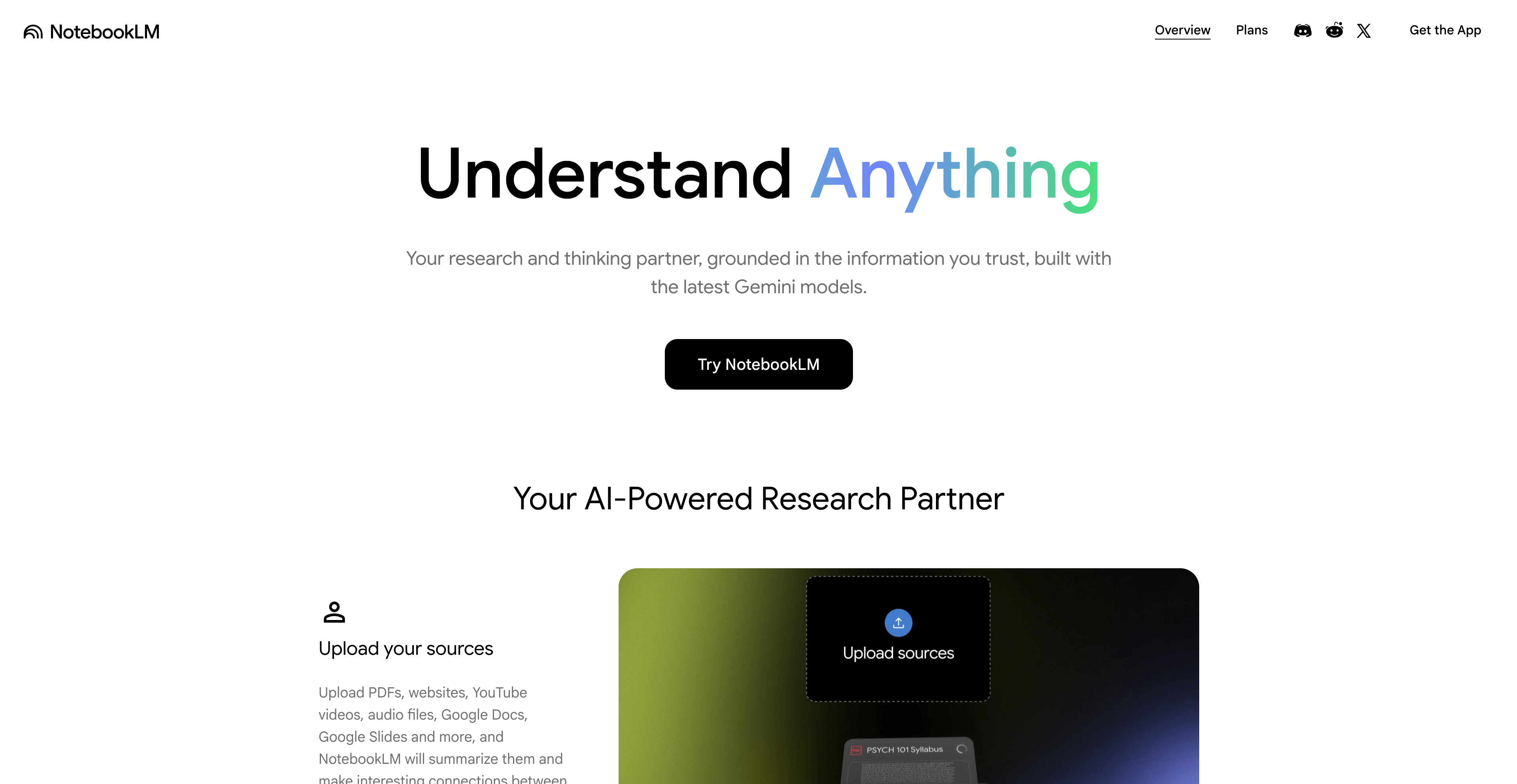
NotebookLM is Google’s AI-powered research and study assistant designed to help users better understand their own learning materials. Rather than focusing solely on content generation, NotebookLM works as a source-grounded AI companion that interacts directly with uploaded documents.
Students can upload articles, research papers, lecture notes, PDFs, and course materials, then ask questions and receive answers based specifically on those sources. This makes it especially useful for research-heavy subjects and deep academic study.
NotebookLM helps learners organize information, identify key concepts, connect ideas across multiple documents, and generate summaries from large collections of content. Many students use it when working on research projects, university coursework, and complex reading assignments.
The platform’s emphasis on source-based learning makes it a valuable tool for students who want to explore topics in greater depth while staying connected to their original study materials.
Key Features:
• Source-Based AI Assistance
• Research Support
• Document Summaries
• Question Answering
• Multi-Document Analysis
• Academic Reading Assistance
Best For: University students, researchers, and learners working with large volumes of information.
5. Revisely
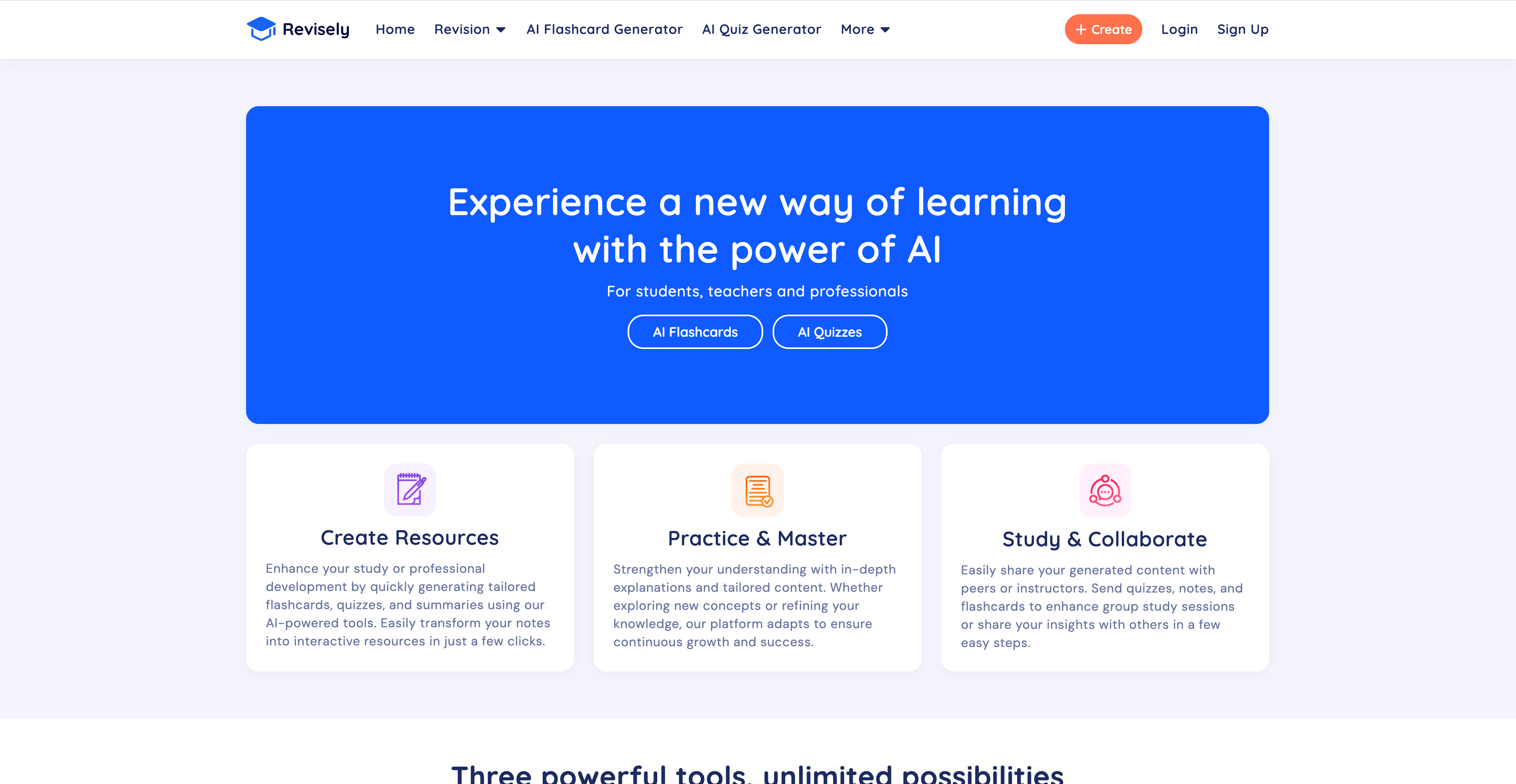
Revisely is an AI-powered revision platform focused on helping students prepare for exams through active study methods. The platform allows users to generate flashcards, quizzes, revision notes, and practice materials from educational content.
Its design centers around exam preparation and revision efficiency. Students can upload learning resources and quickly convert them into study materials that support self-testing and knowledge review.
Revisely is particularly useful for learners who want a streamlined revision workflow. Instead of spending time creating resources manually, students can focus on reviewing concepts, answering questions, and identifying weak areas before exams.
The platform is suitable for a variety of subjects and academic levels, making it a practical option for both high school and university students.
Key Features:
• AI Flashcards
• AI Quiz Generation
• Revision Notes
• Exam Preparation Tools
• Practice Questions
• Study Material Conversion
Best For: Students looking for dedicated revision and exam-preparation tools.
6. RemNote
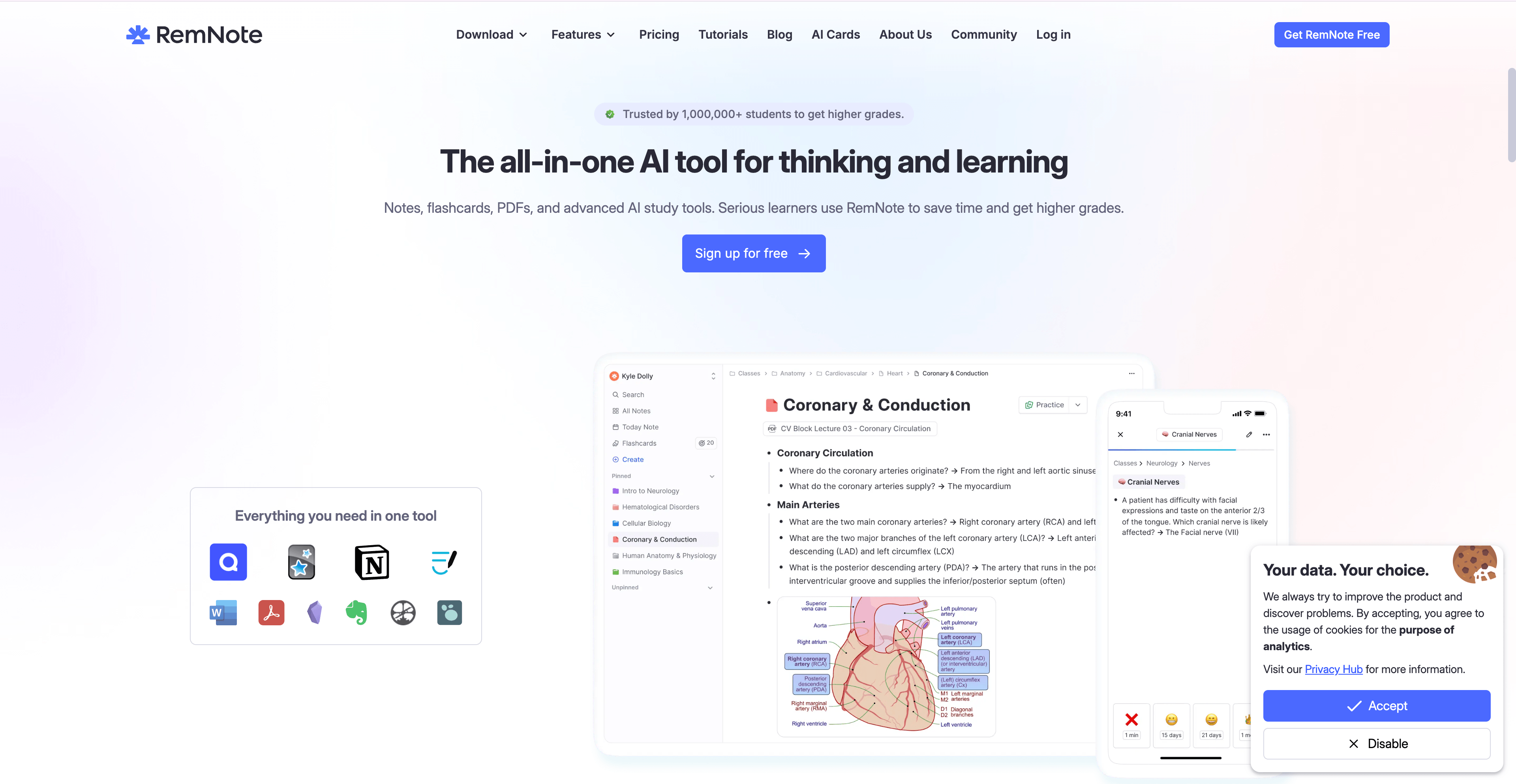
RemNote combines note-taking, knowledge management, and spaced repetition learning into a single platform. It is particularly popular among students who want to build long-term understanding and retain information over extended periods.
The platform allows users to create structured notes and automatically transform important concepts into flashcards. These flashcards can then be reviewed using spaced repetition techniques that schedule future reviews based on previous performance.
Many students appreciate RemNote because it supports both deep learning and memory retention. Rather than separating notes and flashcards into different systems, the platform integrates them into a unified workflow.
RemNote is widely used by medical students, language learners, university students, and professionals studying large amounts of information over long periods.
Key Features:
• Integrated Note-Taking
• Spaced Repetition Flashcards
• Knowledge Graphs
• Long-Term Review System
• Study Scheduling
• Connected Learning Notes
Best For: Students focused on long-term retention and structured knowledge management.
7. Mindgrasp
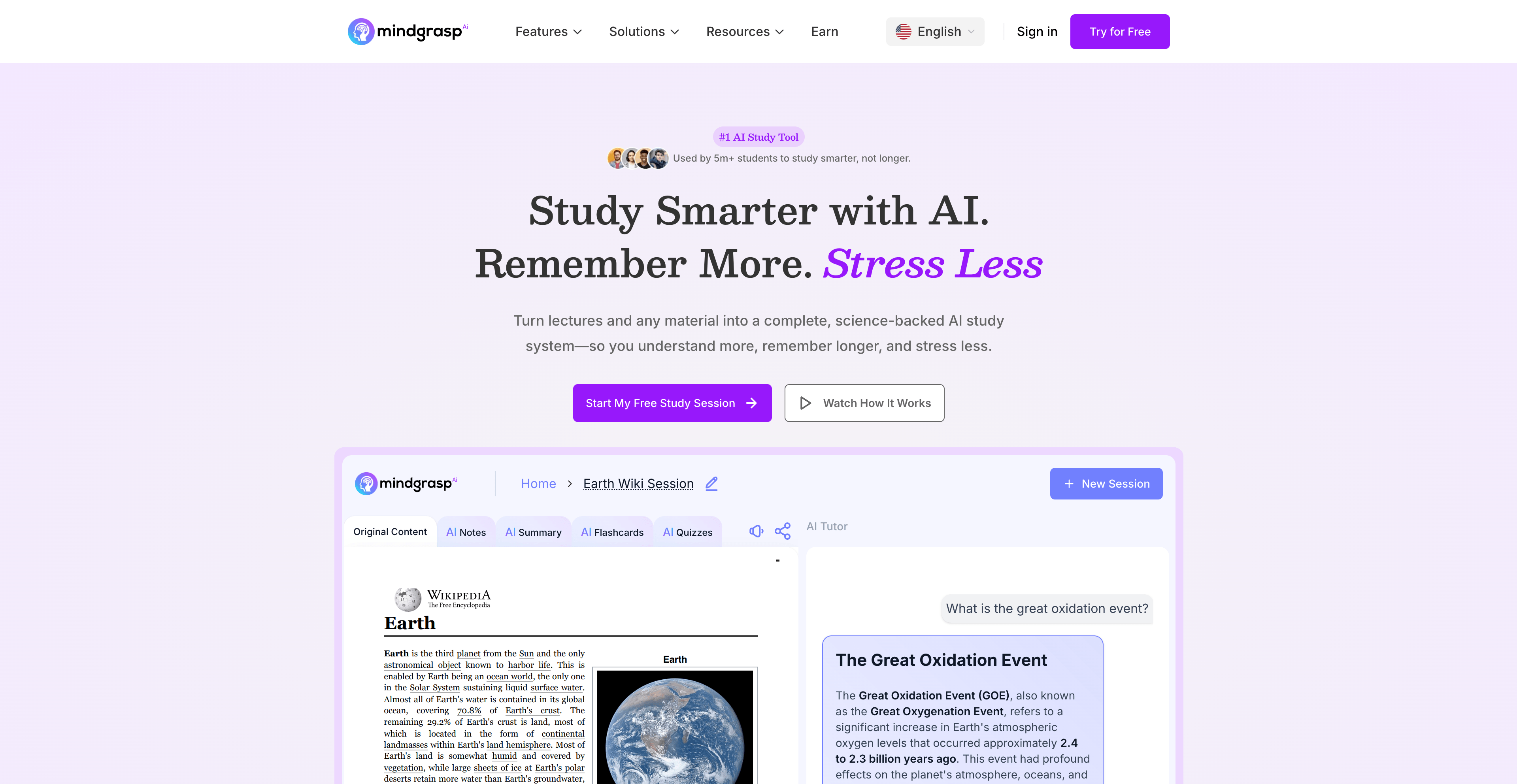
Mindgrasp is an AI-powered study tool that helps students generate summaries, notes, flashcards, quizzes, and explanations from educational content. The platform supports a variety of input formats, including PDFs, videos, lectures, articles, and web content.
Students can quickly extract key information from lengthy materials and create study resources that simplify the review process. This makes Mindgrasp particularly useful for learners who need to process large amounts of information efficiently.
The platform also includes AI-powered explanations that help students better understand difficult topics. Rather than only summarizing information, it can provide additional context and clarification when needed.
Because it supports multiple content formats and learning resources, Mindgrasp is often used as a flexible study companion across different subjects and educational levels.
For a focused product overview, you can also visit the dedicated QuizRise Mindgrasp alternative page.
Key Features:
• AI Summaries
• AI Flashcards
• AI Quizzes
• Lecture and Video Support
• PDF Analysis
• AI Explanations
• Study Resource Generation
Best For: Students who want AI-powered summaries, explanations, and study materials from multiple content types.
Why Students Compare QuizRise with Studley Alternatives in 2026
When comparing Studley alternatives, QuizRise can be a strong fit because it combines multiple study tools and evidence-based learning methods within a single platform. Rather than focusing only on summaries, flashcards, note-taking, or AI tutoring, QuizRise helps students actively engage with learning materials and improve long-term retention.
One of the main reasons students compare QuizRise with other Studley alternatives is its ability to generate quizzes, flashcards, and summaries from a wide variety of content sources. Users can upload PDFs, PowerPoint presentations, Word documents, YouTube videos, web pages, and class notes, then instantly transform them into interactive study resources.
QuizRise is built around Active Recall. Research on retrieval practice consistently shows that testing yourself can be more effective for long-term learning than simply rereading notes or reviewing summaries. By generating practice questions automatically, QuizRise helps students identify knowledge gaps and strengthen understanding through self-testing.
QuizRise also serves both students and educators. In addition to creating study materials, teachers can build assessments, share quizzes, track student performance, analyze results, and monitor learning progress. This makes the platform suitable for classroom instruction, tutoring, and independent study.
Another advantage is flexibility. Students can study using multiple-choice questions, true-or-false activities, fill-in-the-blank exercises, flashcards, and summaries, all generated from the same source material. This allows learners to adapt their study methods based on the subject, learning style, and exam requirements.
For students searching for a Studley alternative in 2026, QuizRise offers a strong combination of AI-powered content generation, Active Recall learning, exam preparation tools, classroom assessment features, and progress tracking. These capabilities make it a practical Studley alternative to compare.
Final Verdict: Which Studley Alternative Should You Choose in 2026?
For many students, QuizRise can be a practical Studley alternative in 2026. While Studley offers a variety of AI-powered learning features, QuizRise combines content generation, Active Recall learning, exam preparation, and classroom assessment tools within a single platform, making it a strong choice for both students and educators.
That said, the best Studley alternative ultimately depends on your learning style and academic goals.
If your primary focus is AI tutoring and guided explanations, platforms like StudyFetch and NotebookLM provide strong options. Students who prefer flashcard-based learning may find Knowt or RemNote particularly useful. Revisely offers a streamlined revision experience, while Mindgrasp excels at generating summaries and explanations from large amounts of content.
What makes QuizRise useful for many Studley alternative searches is its balance between simplicity, flexibility, and evidence-based learning methods. Users can upload PDFs, PowerPoint presentations, Word documents, YouTube videos, web pages, and class notes, then instantly generate quizzes, flashcards, and summaries from those materials.
QuizRise also places a strong emphasis on Active Recall, helping students move beyond passive reading and engage directly with content through self-testing. Instead of simply reviewing notes, learners can continuously practice key concepts and identify knowledge gaps before exams.
For teachers and tutors, QuizRise offers additional value through assessment creation, quiz sharing, student performance tracking, and learning analytics. These features make the platform suitable for independent study, tutoring programs, and classroom environments alike.
While every platform on this list offers unique strengths, QuizRise provides a complete learning experience for students who want to create study materials, test their knowledge, improve retention, and prepare more effectively for exams. For learners searching for a Studley alternative in 2026, QuizRise is worth considering.
Related Reading
Study Strategy
Competitor Comparisons
Focused QuizRise Comparisons
Frequently Asked Questions
What is the best Studley alternative?
The best Studley alternative depends on your study workflow. QuizRise can be a strong fit for students and teachers who want active recall, quiz generation, flashcards, printable quizzes, sharing, and assessment workflows. StudyFetch may fit guided AI study support, Knowt is useful for flashcard-first review, NotebookLM works well for source-based research, and RemNote is helpful for connected long-term study.
Is there a free Studley alternative?
Several Studley alternatives offer free access or free tiers. QuizRise lets users start creating study materials for free, while tools like NotebookLM, Knowt, RemNote, and other AI study platforms may offer free or limited access depending on the features and formats you need.
Which Studley alternative is best for flashcards?
Knowt, RemNote, StudyFetch, Mindgrasp, and QuizRise are all worth comparing for flashcards. QuizRise is useful when you want flashcards alongside quizzes, summaries, printable quizzes, sharing, and teacher-friendly assessment workflows from the same study materials.
Which Studley alternative is best for teachers?
QuizRise can be practical for teachers because it supports quiz generation, quiz sharing, printable quizzes, classroom activities, and performance analytics. This makes it useful when educators want to turn study materials into student-ready assessments without building every quiz manually.
Is QuizRise better than Studley?
Neither tool is universally better. Studley can be a useful AI study assistant for students who want help generating study resources and learning support. QuizRise may be a better fit when you specifically need active recall, flexible quiz generation, flashcards, printable quizzes, sharing, and teacher-friendly assessment workflows.