

Never before has access to information been as easy as it is today. Thanks to AI tools, search engines, and digital resources, we can find almost any piece of information within seconds. The challenge is no longer finding information. It is learning it, remembering it, and applying it when it matters most.
Reading a chapter or asking an AI assistant to explain a concept may help you understand it in the moment. However, understanding something does not necessarily mean you have learned it. Many students realize this during exams when they struggle to remember information they thought they had already mastered.
This highlights one of the most valuable skills in modern education: turning information into long term knowledge instead of simply consuming it.
That is why the way we learn is evolving. Rather than relying on passive reading and endless rereading, more students are adopting evidence based learning techniques such as Active Recall and Spaced Repetition. These scientifically proven study methods strengthen long term memory by encouraging learners to retrieve information repeatedly over time. Real learning does not happen when you first read something. It happens when you can still recall and apply that knowledge days, weeks, or even months later.
One AI tool that has become increasingly popular for research and document analysis is NotebookLM. Its ability to analyze sources, answer questions based on uploaded materials, generate concise summaries, and create study aids has made it one of the most talked about AI learning tools in recent years.
However, today’s students, teachers, and professionals often compare tools based on workflow fit. Some need source-grounded research and note organization, while others need classroom-ready quizzes, printable practice materials, sharing, analytics, or a more direct active-practice workflow.
As a result, many people are asking the same question:
Is NotebookLM the best AI study tool for my learning goals?
The answer depends on how you study.
Quick answer: If you need source-grounded research, document analysis, and knowledge organization, compare NotebookLM with research-focused tools such as YouMind, Obsidian, Notion AI, or Afforai. If you need active studying, classroom quiz creation, printable practice materials, sharing, analytics, and teacher-friendly assessment workflows, QuizRise is the NotebookLM alternative to compare first.
If your primary goal is researching documents, organizing information, and understanding complex topics, NotebookLM is an excellent option. But if you are looking for a study workflow centered on Active Recall, classroom assessment, printable quizzes, sharing, analytics, or long term retention through Spaced Repetition, there are several NotebookLM alternatives worth considering.
In this guide, we will examine NotebookLM’s key features, strengths, and limitations before comparing the best study-focused NotebookLM alternatives available in 2026. Whether you are a student preparing for exams, a teacher creating study materials, or a lifelong learner looking for a smarter way to study, this comparison will help you choose the AI learning tool that best fits your needs.
Quick Comparison of NotebookLM Alternatives
| Alternative | Best For | Key Strength | Consider If You Need |
|---|---|---|---|
| QuizRise | Students and educators | Quizzes, flashcards, summaries, printable quizzes, sharing, and analytics | Classroom-ready active practice |
| StudyFetch | Guided AI study support | AI tutor, notes, flashcards, and quizzes | Personalized study workflows |
| Knowt | Flashcard-first learners | Flashcards, tests, and spaced repetition | Retention-focused review |
| RemNote | Knowledge-management learners | Notes, flashcards, and spaced repetition | Connected long-term study |
| Anki + AnkiHub | Advanced memorization | Customizable spaced repetition and shared decks | Heavy memorization |
| NoteGPT | Video, PDF, and web review | Summaries and AI notes | Fast content review |
| AI Tutor | Step-by-step explanations | Tutoring and guided support | Concept help |
How We Selected These NotebookLM Alternatives
We selected these tools by reviewing public product information and the workflows students and educators usually compare: supported input types, source-based study support, quiz and flashcard generation, Active Recall, Spaced Repetition, note-taking, teacher-friendly sharing, classroom assessment features, ease of use, and free-plan or pricing signals.
We also separated research-first tools from study-first tools. NotebookLM is strong for understanding and organizing sources, while students and teachers often need additional workflows for active practice, printable quizzes, classroom sharing, analytics, and long-term review. Pricing and free-plan notes can change, so verify each provider’s current limits before choosing a tool.
This comparison is based on public product information and workflow fit. A feature not being highlighted in this guide should be read as editorial emphasis, not as a claim about absent capabilities in NotebookLM or any other tool. NotebookLM is a trademark of its respective owner. QuizRise is independent and is not affiliated with, endorsed by, or sponsored by NotebookLM.
What Is NotebookLM?
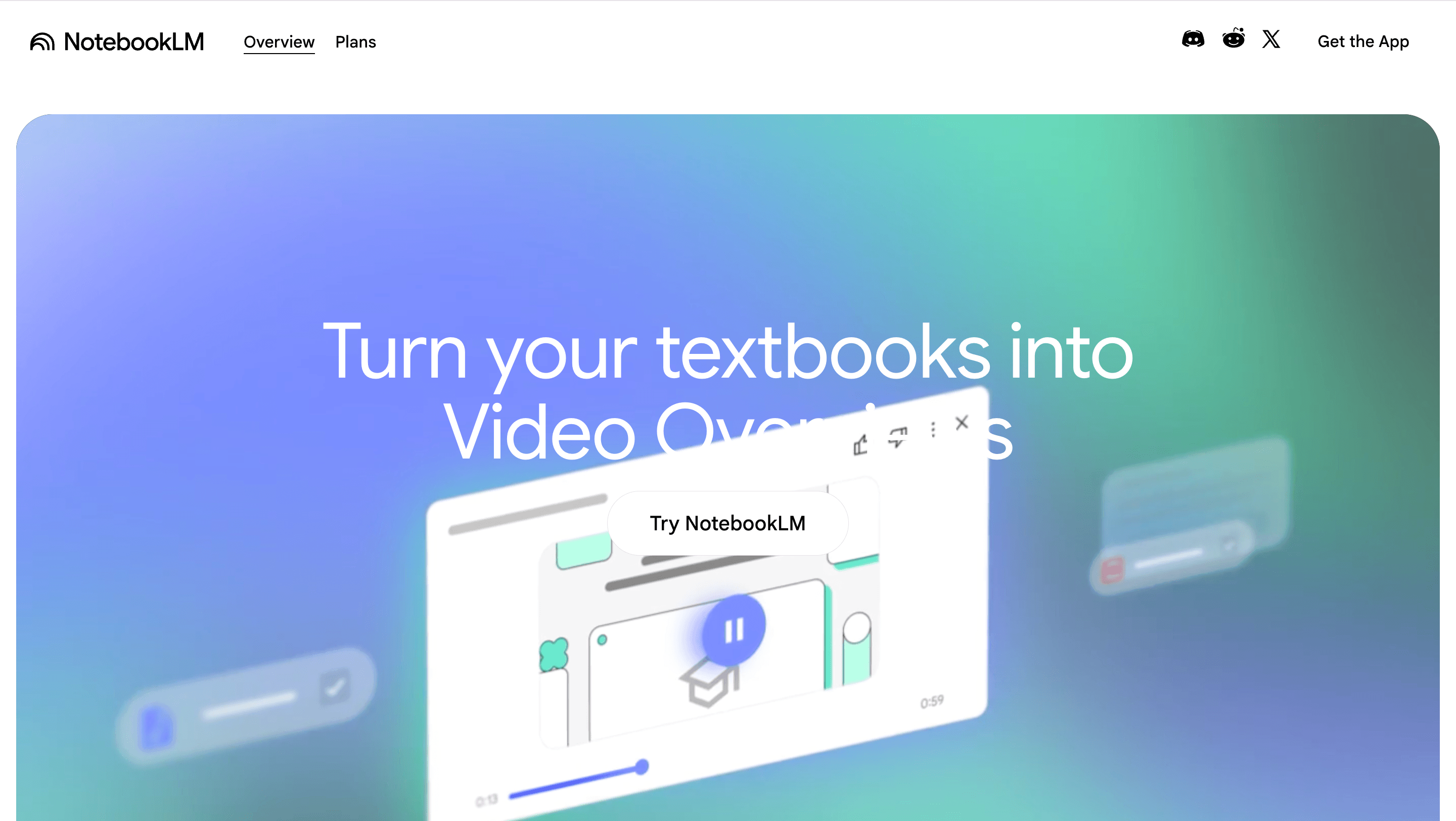
Before comparing the best NotebookLM alternatives, it’s important to understand what NotebookLM is and who it is designed for.
NotebookLM is an AI powered research and note taking tool developed by Google. It allows users to upload PDFs, websites, YouTube videos, audio files, Google Docs, Google Slides, and other sources, then interact with those materials through an AI assistant.
Unlike general AI chatbots, NotebookLM bases its responses primarily on the sources you provide rather than information from across the internet. This makes it particularly useful for summarizing long documents, extracting key insights, answering questions about your materials, and identifying connections between multiple sources.
Because of these capabilities, NotebookLM has become a popular choice for students, researchers, educators, and professionals who need to understand complex information, analyze research papers, organize meeting notes, or manage large collections of documents. It can also help transform sources into formats such as study guides, briefings, audio overviews, video overviews, mind maps, flashcards, and quizzes.
Because NotebookLM now includes flashcards and quizzes, it should not be treated only as a document analysis tool. The reason to compare alternatives is usually workflow fit: some users need printable quizzes, classroom sharing, teacher analytics, direct quiz creation from multiple study materials, or a more structured active-practice workflow.
Understanding this distinction is essential when choosing the right AI learning tool. The best option depends not only on how you access information, but also on how you want to learn and remember it.
The 7 Best NotebookLM Alternatives in 2026
1. QuizRise – NotebookLM Alternative for Active Learning and Exam Preparation
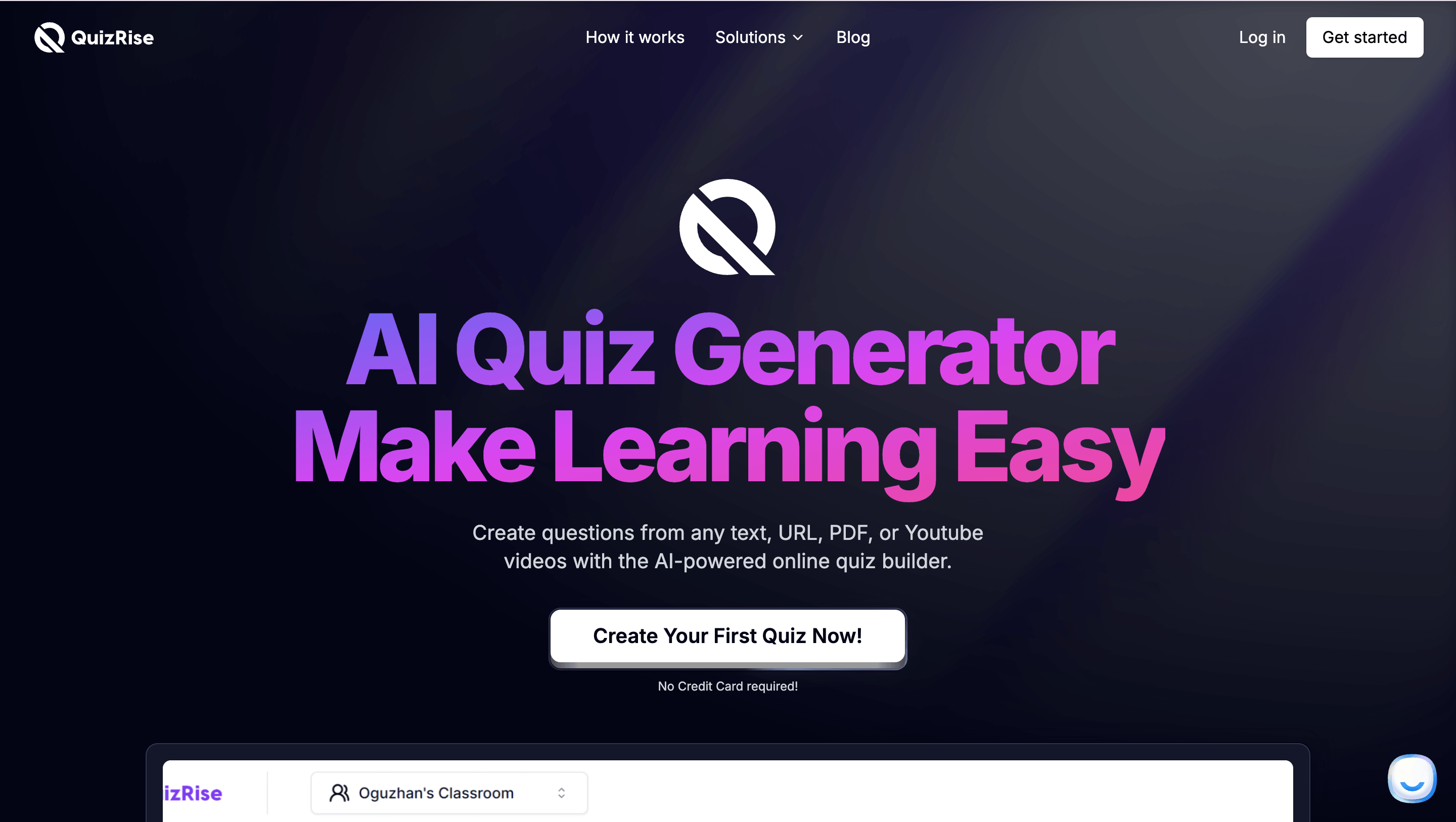
Best for: High school and college students, teachers, professionals, and lifelong learners
NotebookLM helps users better understand their study materials by analyzing uploaded sources. It can summarize sources, answer questions, generate study aids, and make complex information easier to understand. However, for many learners, understanding information is only the beginning. The real challenge is retaining that knowledge over the long term, reviewing it efficiently, and recalling it when it matters most.
For learners who want a more direct active-practice and classroom-ready quiz workflow, QuizRise can be useful.
Rather than being just a research tool, QuizRise is a comprehensive AI powered study platform. It can instantly transform Word documents, PowerPoint presentations, web pages, and plain text into quizzes, AI flashcards, summaries, and other study materials. Students can also use dedicated workflows such as the PDF to quiz maker and YouTube to quiz maker when they want source-specific practice.
One of QuizRise’s greatest strengths is that it is built around Active Recall and Spaced Repetition, two learning methods supported by cognitive science research on retrieval practice and distributed review.
Active Recall focuses on retrieving information from memory instead of simply rereading notes. Every time you answer a quiz question or try to remember the answer to a flashcard before revealing it, your brain actively retrieves information. Research on the testing effect has shown that this approach can improve long term retention compared with passive review.
Spaced Repetition complements this process by scheduling reviews at carefully timed intervals. Instead of reviewing the same material repeatedly in a short period, learners revisit concepts over time. Research on distributed practice and broader reviews of effective learning techniques support spaced review as a strong study strategy.
When combined, these two techniques encourage learners to test themselves regularly, identify weak areas, and spend more time on the topics that need additional practice. This approach is highly effective for academic courses, university studies, professional certifications, language learning, and any subject that requires long term knowledge retention.
QuizRise brings together many of the features users expect from a modern AI study tool. Users can instantly generate quizzes with an AI quiz generator from their own study materials, create AI powered flashcards, produce concise summaries for quick revision with an AI PDF summarizer, and export study materials as PDFs. Since all content is generated from the user’s own sources, every quiz and flashcard remains closely aligned with the material they actually need to learn.
For teachers, QuizRise is much more than a content generation tool. Educators can share quizzes with students through links or QR codes, host live classroom quizzes, track student performance with detailed analytics, and provide downloadable study materials. As a result, QuizRise serves as a complete AI powered learning platform for both individual learners and educational institutions.
Key Features
- Generate quizzes, flashcards, and summaries from PDFs, Word documents, PowerPoint presentations, YouTube videos, web pages, and text
- AI powered quiz and flashcard generator
- Active Recall based learning system
- Spaced Repetition for long term memory retention
- AI generated summaries for faster revision
- Teacher dashboard with student performance analytics
- Share quizzes via links or QR codes
- Live quizzes for classrooms and online learning
- Export quizzes and summaries as PDF
- Available on web, mobile, and tablet
2. StudyFetch – AI Study Assistant for Interactive Learning
Best for: College students and independent learners
If you’re looking for a NotebookLM alternative with a conversational AI tutor, StudyFetch is worth considering. Rather than focusing only on document analysis, it allows users to upload PDFs, lecture slides, notes, and other study materials before interacting with them through an AI assistant.
One of StudyFetch’s standout features is Spark.E, its AI tutor. Students can ask questions about their notes, request explanations for difficult concepts, and receive personalized guidance while studying. This creates a more interactive learning experience compared to simply reading study materials.
StudyFetch also includes AI generated quizzes, flashcards, and study plans, making it a useful option for students who prefer learning through conversations with an AI tutor. While its focus is on AI assisted guidance, students looking for a stronger emphasis on long term retention and structured review may also want to consider platforms built specifically around Active Recall and Spaced Repetition.
Key Features
- Spark.E AI tutor
- AI generated quizzes and flashcards
- Study plans
- AI chat with uploaded documents
- Supports PDFs, presentations, and lecture notes
- Multiple document formats
3. Knowt – NotebookLM Alternative for Flashcards and Study Sets
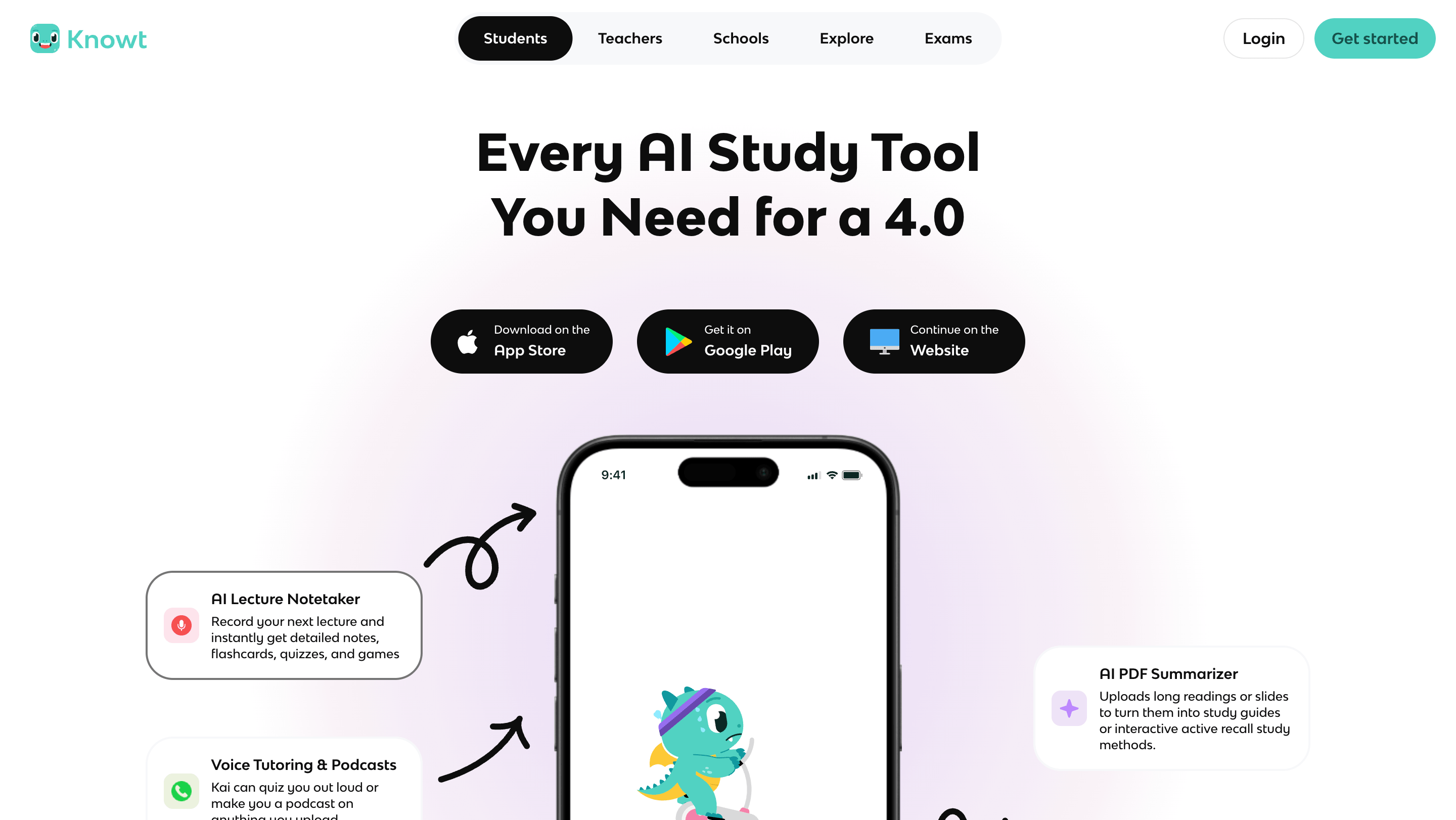
Best for: High school and college students
Knowt has become popular among students thanks to its generous free plan and simple study experience. Users can upload notes and PDFs to automatically generate flashcards and quizzes, helping them begin studying without spending time creating materials manually.
The platform also includes review modes designed to encourage regular practice, making it suitable for students who want a straightforward way to reinforce what they have learned. Another advantage is its large library of publicly shared study sets, allowing users to explore materials created by other students.
Knowt is particularly appealing for learners looking for a free AI study tool with built in flashcards and quiz generation.
If you are comparing flashcard-first study tools specifically, the Knowt alternatives guide covers QuizRise, Quizlet, Anki, and other tools in that workflow.
Key Features
- AI flashcard generator
- Automatic quiz creation
- Public study set library
- Review focused study modes
- PDF and note support
- Free plan available
4. RemNote – Connected Notes and Long Term Learning
Best for: Students studying information intensive subjects
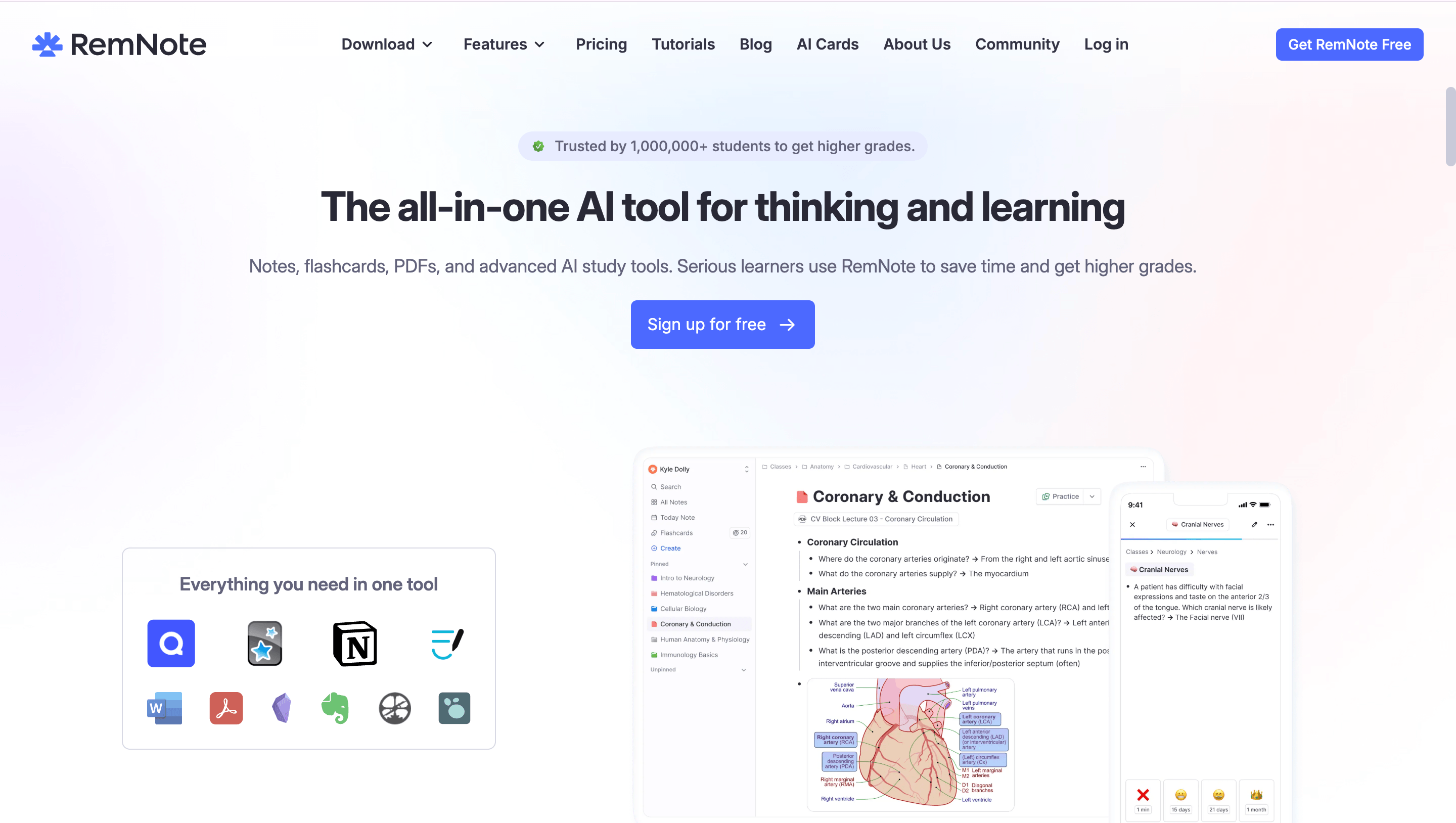
RemNote combines note taking with memory based learning. Instead of treating notes and flashcards as separate tools, it allows users to build structured notes while automatically creating flashcards from the same content.
Its knowledge graph helps learners connect related concepts, making it easier to organize complex subjects. RemNote also includes a built in Spaced Repetition system that schedules reviews automatically, helping users maintain consistent study habits over long periods.
Students who enjoy building detailed knowledge bases alongside regular review often find RemNote to be a strong choice.
Key Features
- Integrated note taking and flashcards
- Knowledge graph organization
- Built in Spaced Repetition
- Linked concepts
- Daily review scheduling
- Long term learning focus
5. Anki + AnkiHub – Advanced Flashcard Based Learning
Best for: Medical students, language learners, and certification exam preparation
Anki remains one of the most widely used spaced repetition applications in the world. It allows users to create highly customizable flashcards while using a proven review algorithm designed to maximize long term memory retention.
AnkiHub expands this experience by allowing users to collaborate on shared decks and access continuously updated community content. This is particularly valuable in fields where study materials frequently change, such as medicine.
Although the interface is simpler than many modern AI study tools, Anki continues to be a favorite among learners who want complete control over their flashcard system.
For a focused comparison around AI flashcards, spaced repetition, and QuizRise workflows, see the dedicated QuizRise Anki alternative page.
Key Features
- Industry leading Spaced Repetition algorithm
- Fully customizable flashcards
- Shared decks through AnkiHub
- Large global community
- Offline support
- Extensive add on ecosystem
6. NoteGPT – Summarizing Videos and Documents
Best for: Students who learn primarily from YouTube and online content
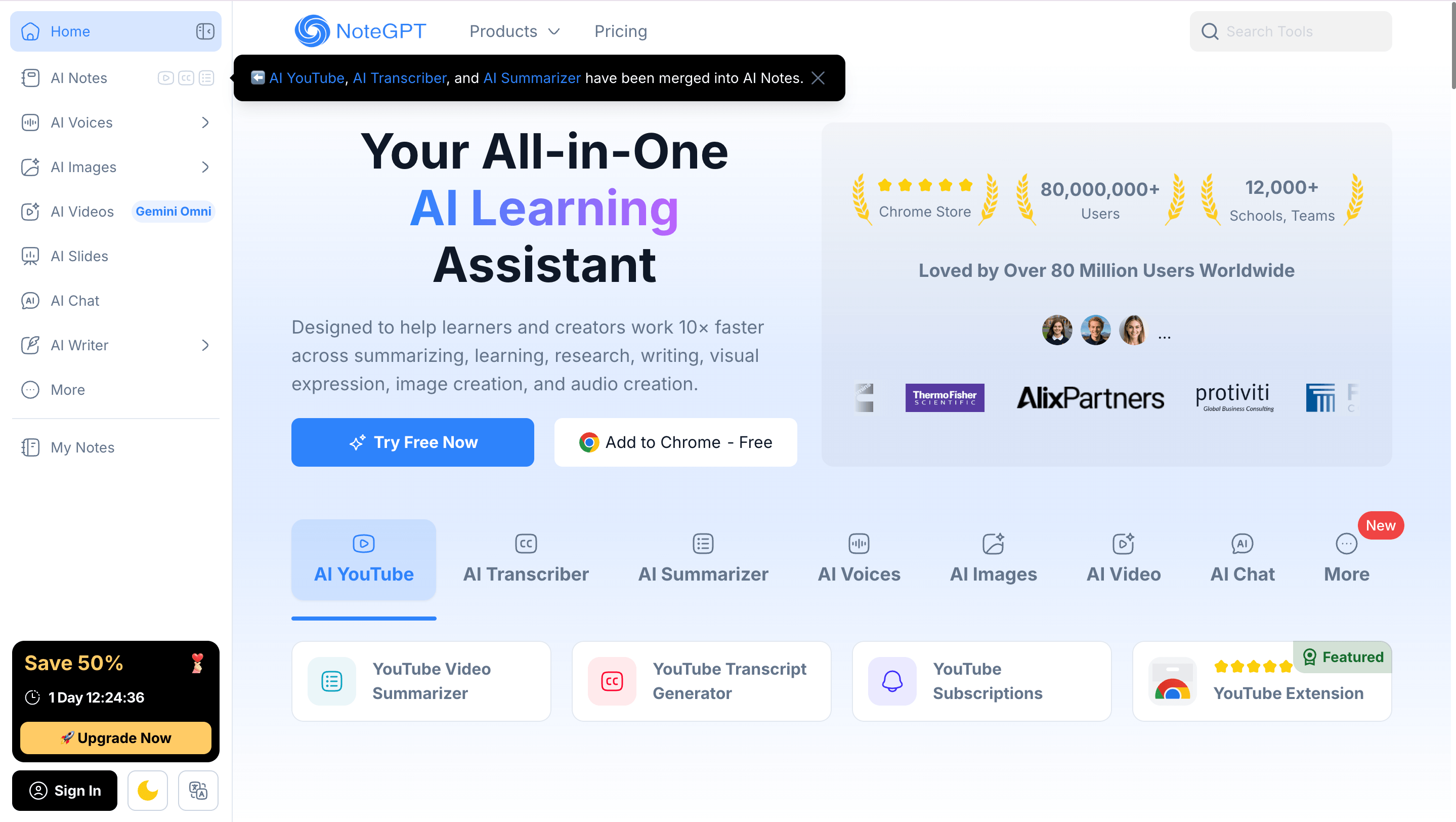
If your study routine relies heavily on educational videos, NoteGPT can help save time by generating concise summaries from YouTube content. Instead of watching lengthy videos repeatedly, users can review key concepts in a much shorter format.
Beyond videos, NoteGPT also supports PDFs, websites, and other digital resources, allowing learners to generate notes from multiple content types in one place.
For students focused on quickly understanding large amounts of information, NoteGPT offers a convenient AI powered summarization workflow.
Key Features
- YouTube video summaries
- PDF and website analysis
- AI note generation
- Content summarization
- Multiple content sources
- Quick study note creation
7. AI Tutor – Personalized AI Guided Learning
Best for: Students who prefer step by step explanations
AI Tutor focuses on helping students understand concepts through personalized explanations rather than simply providing answers. Users can ask questions, request additional examples, and receive explanations that adapt to their learning progress.
The platform is particularly useful for subjects such as mathematics, science, and engineering, where understanding each step of the solution is often more important than memorizing the final answer.
Students looking for an AI powered tutor that explains concepts interactively may find AI Tutor to be a useful learning companion.
Key Features
- AI powered tutoring
- Step by step explanations
- Personalized learning
- Mathematics and science support
- Interactive question and answer system
- Adaptive learning experience
Which NotebookLM Alternative Should You Choose?
The best NotebookLM alternative ultimately depends on how you study and what you want to achieve.
If your primary goal is researching documents, analyzing sources, and organizing information, NotebookLM can be a strong option.
If you prefer learning through conversations with an AI tutor, StudyFetch offers an interactive experience with its Spark.E assistant. If you’re looking for a generous free plan, Knowt is a solid choice. Learners who want powerful note taking and long term review may prefer RemNote, while Anki remains one of the best tools for users who want complete control over their flashcard system. NoteGPT is particularly useful for summarizing YouTube videos and online content, and AI Tutor is well suited for students who benefit from step by step explanations.
If you want an AI study platform with a stronger focus on direct quiz creation, flashcards, summaries, Active Recall, Spaced Repetition, teacher tools, live quizzes, printable quizzes, and progress tracking, QuizRise is a practical NotebookLM alternative to compare.
QuizRise is designed to help you learn information, remember it, and recall it when it matters most. Whether you’re studying for an exam, creating teaching materials, or building a long term learning habit, it provides a focused active-practice workflow in a single platform.
If your goal is not just to organize knowledge but to retain it, QuizRise is an AI study tool worth considering in 2026.
Why More Students and Teachers Are Choosing QuizRise
Finding the right AI study tool is about more than generating summaries or answering questions. The most effective platforms help you actively engage with information, reinforce your understanding, and remember what you’ve learned long after your study session ends.
QuizRise was built with this goal in mind. Instead of simply helping you organize notes, it transforms your own study materials into quizzes, flashcards, summaries, and other interactive learning resources within seconds. By combining Active Recall and Spaced Repetition, QuizRise encourages students to practice retrieving information rather than passively rereading it.
Whether you’re studying for school, preparing for university exams, learning a new language, or creating educational materials for your students, QuizRise provides the tools to make studying more efficient and more effective.
Why Students Choose QuizRise
- Generate quizzes, flashcards, and summaries from your own study materials
- Turn PDFs, PowerPoint presentations, websites, YouTube videos, and notes into interactive learning resources
- Practice with scientifically proven Active Recall and Spaced Repetition techniques
- Share quizzes with students using links or QR codes
- Host live quizzes and monitor student performance
- Access your study materials anytime on desktop, tablet, or mobile devices
Start Studying Smarter with QuizRise
Studying effectively isn’t about spending more hours with your notes. It’s about using the right learning techniques.
With QuizRise, you can upload your PDFs, lecture notes, PowerPoint presentations, websites, or YouTube videos and instantly generate quizzes, flashcards, and AI powered summaries tailored to your own study materials.
Instead of rereading the same notes repeatedly, challenge yourself with interactive quizzes, reinforce your memory through Active Recall, and build long term retention with Spaced Repetition.
Whether you’re a student preparing for exams or a teacher creating engaging learning experiences, QuizRise helps make studying faster, smarter, and more effective.
If you’re comparing NotebookLM alternatives because you need direct active-practice workflows, classroom-ready quiz creation, printable study materials, and teacher-friendly sharing, QuizRise is worth trying in 2026.
Related Reading
Study Strategy
Competitor Comparisons
Focused QuizRise Comparisons
Frequently Asked Questions
What is the best NotebookLM alternative?
The best NotebookLM alternative depends on your workflow. QuizRise can be a strong fit for students and teachers who want active-practice workflows, quiz generation, flashcards, printable quizzes, sharing, and classroom assessment tools. StudyFetch, Knowt, RemNote, AnkiHub, NoteGPT, and AI Tutor may fit other study needs.
Is there a free NotebookLM alternative?
Several NotebookLM alternatives offer free access or free tiers. QuizRise lets users start creating study materials for free, while tools like Knowt, NoteGPT, RemNote, and Anki may offer free or limited access depending on the features and formats you need.
Which NotebookLM alternative is best for flashcards?
Knowt, RemNote, Anki, StudyFetch, NotebookLM, and QuizRise are all worth comparing for flashcards. QuizRise is useful when you want flashcards alongside quizzes, summaries, printable quizzes, sharing, and teacher-friendly assessment workflows from the same study materials.
Which NotebookLM alternative is best for teachers?
QuizRise is a practical option for teachers who want to turn PDFs, videos, websites, and text into quizzes and flashcards, then share quizzes with students, use live classroom activities, export printable materials, and review learner performance.
Is QuizRise better than NotebookLM?
Neither tool is universally better. NotebookLM is strong for source-grounded research, notes, study guides, audio and video overviews, mind maps, flashcards, and quizzes. QuizRise may be a better fit if your priority is active-practice creation, printable quizzes, classroom delivery, quiz sharing, and teacher-friendly assessment workflows.